Beyond Accounts Receivable Automation: How to Get Paid Faster
In today’s rapidly evolving business landscape, optimizing cash flow is essential for organizational sustainability and growth. Accounts Receivable (AR) automation has gained significant attention for its ability to streamline operations, minimize errors, and enhance efficiency. However, amidst the allure of automation, it is crucial to recognize its inherent limitations and the necessity of complementing it with strategic human intervention. Let’s examine a case where AR automation doesn’t fully address the issues:
Where AR Automation Falls Short
Imagine you’re the CFO of an industry-leading firm with annual revenue exceeding $200 million but facing persistent challenges in getting customers to pay within terms. Despite a strong market presence and good customer relationships, your company struggles with high Days Sales Outstanding (DSO) and increasing reliance on its operating line to fund growing receivables.
You invest in an AR automation tool that enables automated email notices, auto-statement generation, and a convenient payment portal. Customers receive prompts to settle both current and overdue invoices through the portal. Problems with delayed cash flow and inefficient processes should disappear, right? Wrong. Here’s where the pitfalls immediately start to emerge:
- Emails that Fall Flat: While automation facilitates prompt reminders and statements, it lacks the capability to reach the right people within the customer’s finance team to determine why you’re not getting paid. Companies may send frequent notices of non-payment, but if your collectors aren’t on the phone finding the right person to solve the issues, you’re just wasting time. Human oversight is crucial for investigating the reasons behind delayed payments and resolving underlying issues, such as billing or portal errors, that automated reminders can’t address.
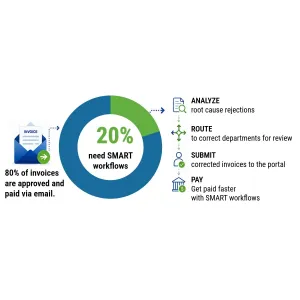
- Payment Processing Discrepancies: Many of your largest customers will require you to use their Vendor Portals to check payment statuses. Even if you’ve implemented automation that sends invoices into these portals and monitors statuses, you need a team to work through the roadblocks preventing payments within your terms. For example, customer purchase orders may run out of funds without anyone monitoring this, or you may bill the wrong entity, requiring a credit/rebill. Additionally, some customers’ pay dates may show 90-day terms instead of the 30 days you provided. Human intervention is needed to solve these issues and involve the proper internal teams to correct discrepancies. Automation can alert you to the problem, but human resources are necessary to research, correct, solve, and collect payments.
Optimizing Cash Flow Through Effective AR Management
- Integrated Solutions: To achieve true optimization of your Accounts Receivable (AR) processes, a comprehensive and integrated approach is necessary. This involves more than just deploying automation tools; it requires the integration of experienced AR professionals who can conduct thorough credit analyses, identify root causes of payment delays and disputes, and implement effective collections strategies. At TCD, we offer a multifaceted solution that combines cutting-edge automation with the knowledge of seasoned AR professionals. By doing so, we ensure that every facet of your AR process is meticulously addressed, leading to improved cash flow and operational efficiency.
- Root Cause Analysis: A fundamental component of effective AR management is understanding the underlying reasons for payment delays and disputes. Our approach goes beyond surface-level symptoms to delve deeply into the data. We analyze patterns and trends to identify recurring issues, whether they originate from customer disputes, internal process errors, or external factors. By uncovering and addressing these root causes, we not only resolve immediate issues but also implement preventive measures to reduce the likelihood of future delays. This proactive stance helps in minimizing disruptions to your cash flow and fostering stronger relationships with your customers.
- Establishing Proper Processes: Successful AR management hinges on the establishment and maintenance of well-defined and consistent processes. We work with your team to develop and implement best practices across all stages of the AR cycle. This includes creating standardized procedures for invoicing that ensure accuracy and clarity, establishing systematic follow-up protocols to expedite collections, and setting up efficient dispute resolution mechanisms. By embedding these practices into your daily operations, we help create a robust AR framework that supports sustainable financial health.
Conclusion
AR automation offers many benefits, but it is not a panacea. To achieve true cash flow optimization, it is essential to complement automation with strategic human intervention and robust processes. At TCD, we go beyond automation by offering a comprehensive range of services, including but not limited to, effective collections strategies, actual collections, proactive dispute resolution, portal specialty services, and thorough credit analyses. Our approach ensures that both technological and human elements work together to address and solve the root causes of AR issues, leading to better cash flow management.
If your company is struggling with high DSO, persistent AR issues, or inefficiencies in cash flow management, it’s time to rethink your approach. Contact TCD today at info@tcd.com or 800-451-0164 to learn how our integrated solutions can help you transform your AR processes and achieve your financial goals.
Request a Discovery Consultation
"*" indicates required fields